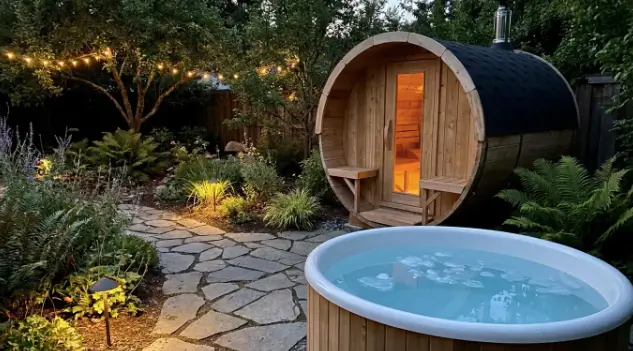
The right sauna kit for a family with a backyard is not the right kit for someone in a one-bedroom apartment, and beginners who shop by “best overall” ratings instead of their actual use case usually end up with something too big, too expensive to wire, or too small for how they hoped to use it. Matching kit type, size, and power draw to where and how often you’ll actually use it matters more than any single spec. Here’s how the decision changes across the four most common first-time buyer scenarios.
Buying for a Backyard, Family-Sized Use Case
A family planning to use a kit together, at least occasionally, generally does best with a 6×6 to 6×9 cabin or a larger barrel sauna in the 5 to 6 foot diameter range, seating three to five adults across two bench tiers. This size almost always needs a dedicated 240V circuit for the heater, which means budgeting for an electrician alongside the kit itself. Outdoor placement also means checking local setback rules from property lines and, in many areas, a permit for the electrical run even though the structure itself may not need one.
Buying for a Solo Apartment or Condo Use Case
For one person in a rented space, a compact infrared cabin or even a sauna blanket makes far more sense than a full cabin kit. These typically run under 1,800 watts, plug into a standard outlet with no electrical work, and take up as little as 9 to 16 square feet. Before buying anything larger than a blanket for an apartment, check the lease for restrictions on permanent fixtures and confirm with the building whether a dedicated circuit modification, if you’d want one later, is even allowed.
Buying for a Shared Basement or Couple’s Use Case
Two people sharing a finished basement space typically land well with a 4×6 or 5×7 cabin kit, big enough for both to sit comfortably without the excess capacity (and excess electrical draw) of a family-sized unit. Basements often run cooler and more humid than the rest of the house, which affects ventilation needs, so a small inline exhaust fan is worth budgeting for even if the kit’s passive vents would be sufficient in a drier, above-grade room. Ceiling height matters here too, since older basements sometimes fall short of the 6’8″ clearance many kits assume.
Buying for a Rental Property or Occasional Guest Use Case
If the kit is going into a short-term rental or a guest space used only occasionally, durability and low-maintenance materials matter more than size. A mid-size kit with a straightforward, hard-to-misuse control panel reduces the odds of a confused guest leaving the heater running unattended. For a landlord adding value to a rental listing, a kit that requires minimal explanation and cleans up easily between guests is worth prioritizing over one with the largest interior.
What Beginners Consistently Get Wrong Regardless of Use Case
The single most common mistake is buying the biggest kit the budget allows rather than the size matched to actual expected use. A 6×9 family kit that mostly sees one person a few times a week wastes both money and electricity relative to a 4×6 that would have covered that same actual pattern. The second most common mistake is not checking electrical capacity before falling in love with a specific model, only to find out later that the panel doesn’t have room for a new 240V breaker without an upgrade that adds hundreds of dollars to the project.
Questions to Answer Before You Start Comparing Models
Before opening a single product page, write down four things: how many people will realistically use the kit in a typical week, whether the space is indoor or outdoor, what your electrical panel currently has available, and whether the location is a home you own long-term or a rental where removability matters. These four answers narrow a crowded market down to a short list fast, and they matter more than brand reputation or aesthetic finish for a first-time buyer, since a beautiful kit that doesn’t fit your actual electrical setup or living situation isn’t a good first purchase regardless of how it looks in photos.
Matching Budget to Use Case
Entry-level infrared kits for solo or apartment use typically start around $1,200 to $2,000. Mid-size cabin or barrel kits for a couple or small family run $3,500 to $6,000 before installation. Larger family cabins with premium wood and higher-output heaters can run $7,000 and up. Rather than starting with a budget number and working backward, it’s worth listing your actual use case first, who’s using it, how often, and where, then shop the current options filtered by size and power requirement instead of price alone, since the cheapest kit for the wrong use case isn’t actually a good deal.
Why the Health Case Doesn’t Depend on Kit Size
It’s worth knowing upfront that the research behind sauna use doesn’t favor larger kits. A 2018 review in Mayo Clinic Proceedings associated more frequent sauna bathing with better cardiovascular outcomes regardless of session size or group size, and a 2018 systematic review in Evidence-Based Complementary and Alternative Medicine reported similar associations tied to consistency of use. A beginner who buys a compact kit sized to their real routine and uses it four times a week is better positioned than someone with a larger kit that ends up used once a month because it never fit their actual life.
Frequently Asked Questions
What size sauna kit is right for a family of four?
A 6×8 or 6×9 cabin kit comfortably seats four adults across two bench tiers, though most families don’t use it together every session, so a 6×6 handles typical day-to-day use with the larger size mainly helping on weekends.
Is an infrared kit a good first sauna for a beginner?
Yes, particularly for solo or apartment use. Infrared kits are cheaper, need less electrical work, and heat up faster, making them a lower-commitment way to find out if regular sauna use fits your routine before investing in a larger kit.
Can renters install a sauna kit without violating a lease?
A freestanding plug-in kit that needs no new wiring or permanent floor attachment is the safest option for renters, since it can be removed entirely at move-out without any modification to the unit itself.
What’s the most common mistake first-time buyers make?
Buying based on the biggest kit they can afford rather than the size that matches how often and with how many people they’ll realistically use it, which leads to underused space and higher electrical costs than necessary.
Do beginners need to know their electrical setup before shopping?
Yes, at least roughly. Knowing whether you have room on your panel for a 240V circuit, or whether you’re limited to a standard outlet, narrows the kit-size decision before you fall in love with a model that won’t work for your space.
References
- Kunutsor SK, et al. “Cardiovascular and Other Health Benefits of Sauna Bathing: A Review of the Evidence.” Mayo Clinic Proceedings, 2018. https://pubmed.ncbi.nlm.nih.gov/30077204/
- “Clinical Effects of Regular Dry Sauna Bathing: A Systematic Review.” Evidence-Based Complementary and Alternative Medicine, 2018. https://pubmed.ncbi.nlm.nih.gov/29849692/
- “Does the Combination of Finnish Sauna Bathing and Other Lifestyle Factors Confer Additional Health Benefits? A Review of the Evidence.” Mayo Clinic Proceedings, 2023. https://pubmed.ncbi.nlm.nih.gov/37270272/
By Renee Castellano